

MRL Elevator: Features, Benefits & Applications
MRL (Machine Room-Less) elevators are a modern solution for residential and commercial buildings where efficient use of space, smooth performance and energy efficiency are important. Unlike conventional elevator systems, an MRL elevator does not require a separate machine room, helping architects and building owners utilize valuable building space more effectively.
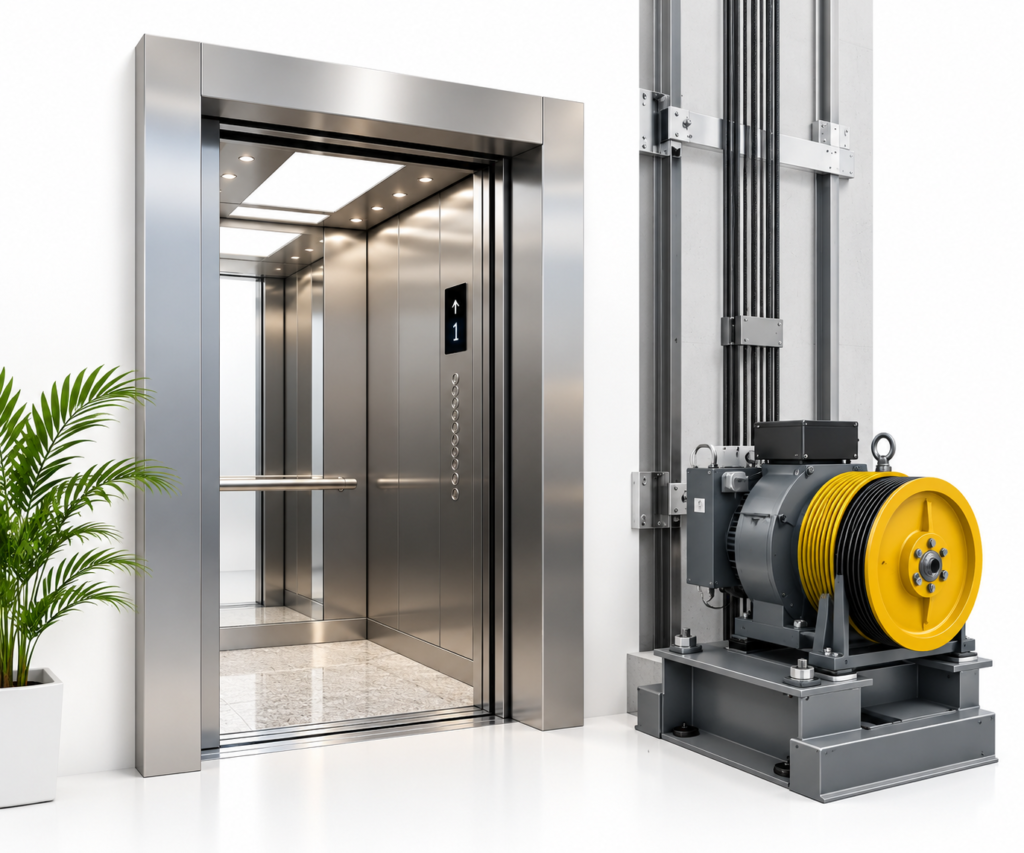
What Is an MRL Elevator?
An MRL (Machine Room-Less) elevator is a traction elevator designed without a separate machine room above the lift shaft. Instead, the compact gearless traction machine and essential control equipment are installed within or adjacent to the elevator shaft. This design reduces the space required for elevator equipment while maintaining efficient and reliable operation.
MRL elevators are commonly used in residential apartments, commercial buildings, offices, hotels and other low- to mid-rise developments. With a gearless traction system and modern VVVF control technology, they can provide smooth acceleration, accurate floor leveling, quiet operation and efficient energy consumption.
Key Features of MRL Elevators
MRL elevators combine compact engineering with modern elevator technology to deliver efficient vertical transportation. Key features include:
• Machine Room-Less Design: Eliminates the need for a separate machine room, helping save valuable building space.
• Gearless Traction Machine: Uses a compact permanent magnet synchronous motor (PMSM) for smooth, quiet and efficient operation.
• VVVF Control Technology: Provides controlled acceleration and deceleration for improved ride comfort and accurate floor leveling.
• Energy-Efficient Operation: Modern gearless technology can reduce energy consumption compared with many conventional geared elevator systems.
• Smooth & Quiet Performance: Designed to minimize vibration and operating noise for improved passenger comfort.
• Modern Safety System: Can integrate safety components such as an overspeed governor, safety gear, buffers, door sensors and an Automatic Rescue Device (ARD), depending on the elevator configuration.**
For technical reference, building owners and professionals may also review the applicable elevator safety standards published by the Bureau of Indian Standards (BIS).
Benefits of MRL Elevators
MRL elevators offer several practical advantages for modern building projects:
• Better Space Utilization: Without a separate machine room, more building space can be used efficiently.
• Lower Energy Consumption: Gearless traction technology and modern drive systems help improve overall energy efficiency.
• Improved Ride Comfort: Smooth acceleration, deceleration and precise floor leveling provide a comfortable passenger experience.
• Reduced Noise & Vibration: Gearless machines are designed for quieter operation, making them suitable for residential and commercial buildings.
• Flexible Building Design: The compact system gives architects greater flexibility when planning the elevator shaft and surrounding building areas.
• Suitable for Modernization: MRL technology can also be considered for selected elevator modernization projects, subject to shaft dimensions, structural conditions and technical feasibility.**
Where Are MRL Elevators Commonly Used?
MRL elevators are widely used in buildings where space efficiency, smooth operation and modern elevator technology are important. Typical applications include:
• Residential Apartments: Suitable for apartment buildings requiring comfortable and reliable passenger movement.
• Commercial Buildings: A practical solution for offices, retail spaces and other commercial properties with regular passenger traffic.
• Hotels & Hospitality Buildings: Smooth and quiet operation helps provide a comfortable experience for guests.
• Hospitals & Healthcare Facilities: MRL systems can be configured for suitable passenger and service applications according to project requirements.
• Educational & Institutional Buildings: Suitable for schools, colleges and other institutions requiring convenient vertical transportation.
• Low- to Mid-Rise Buildings: Commonly considered for projects where a separate machine room is undesirable and the technical requirements can be accommodated within the building design.**
MRL Elevator vs Conventional MR Elevator
Both MRL and conventional MR (Machine Room) elevators use proven traction technology, but their equipment arrangement and building requirements are different.
• Machine Room: An MRL elevator does not require a separate machine room, while a conventional MR elevator normally requires dedicated space for the traction machine and associated equipment.
• Space Requirement: MRL systems can help reduce additional building space requirements, whereas MR elevators require provision for the machine room.
• Traction Technology: Modern MRL elevators commonly use compact gearless traction machines. MR elevators can use geared or gearless machines depending on the system design.
• Energy Efficiency: Modern gearless MRL systems can offer efficient energy performance, although actual consumption depends on capacity, travel, traffic, speed and equipment configuration.
• Application: The appropriate choice between MRL and MR should be based on shaft dimensions, building height, capacity, traffic requirements, structural conditions and applicable technical requirements.**
How to Choose the Right MRL Elevator
Choosing the right MRL elevator requires more than selecting passenger capacity. The complete system should be planned according to the building layout, expected usage and technical requirements. Important factors include:
• Shaft Dimensions: Available shaft width, depth, pit depth and overhead should be checked before finalizing the elevator configuration.
• Passenger Capacity: Select the required capacity according to the type of building and expected passenger traffic.**
• Number of Floors & Stops: Total travel, number of landings and frequency of use influence the selection of the traction machine, controller and other components.**
• Lift Speed: The appropriate speed should be selected according to building height, travel distance and expected traffic.**
• Door & Cabin Configuration: Door opening size, automatic door type, cabin dimensions and finishes should be planned according to available space and project requirements.**
• Safety & Control System: The elevator should use compatible safety devices, controller, drive and rescue systems suitable for the overall lift configuration.**
A proper site assessment and technical evaluation should therefore be completed before finalizing an MRL elevator specification.
Planning an MRL Elevator for Your Building?
ORSHA Elevator & Technology provides MRL elevator solutions for residential, commercial and other building projects. Share your building details, shaft dimensions, number of floors and required passenger capacity with our team. We can review your requirements and assist with a suitable elevator configuration and customized quotation.